- 17th December, 2025
- By Adam Gatt
Top Benefits of Electrical Thermal Imaging in Industrial Facilities
Manufacturers are becoming more competitive in today’s industrial environment, and electrical reliability has never been more critical.
Facilities across Australia depend on complex electrical systems to support production lines, automation, and continuous industrial activity. As plants and workshops’ electrical loads increase, so does the risk of hidden faults and overheated components. These issues can easily lead to outages, equipment damage, or safety hazards.
This is why electrical thermal imaging has become a key preventive maintenance tool. Using advanced infrared technology, it shows manufacturers' issues long before they become expensive or dangerous.
What Is Electrical Thermal Imaging?
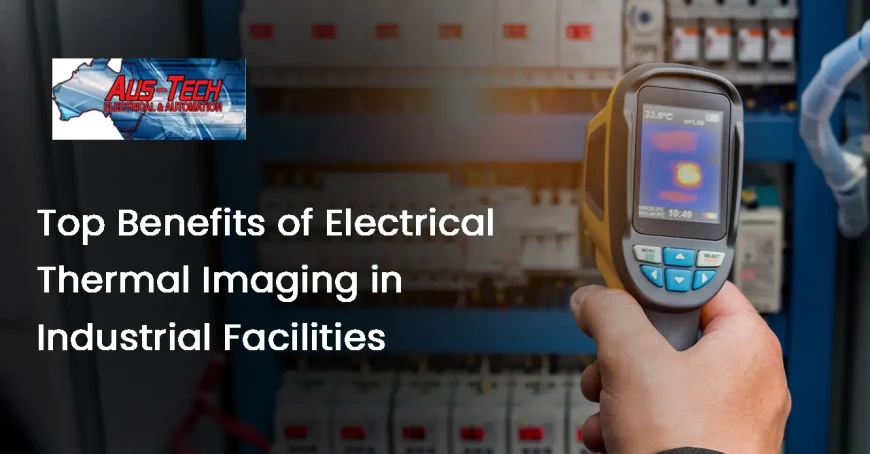
Electrical thermal imaging, or thermographic inspection, is a testing method that uses infrared cameras to detect abnormal temperature patterns within electrical equipment. It detects any excessive heat on any electronics, which are often the earliest indicator of loose terminals, overloaded circuits, deteriorating components, or insulation issues.
Because inspections can be performed by an electrician while equipment remains live, thermal imaging can be done without disrupting operations. It’s widely used across switchboards, distribution panels, transformers, motors, control cabinets, and automated systems.
Thermal imaging is a widely used inspection for many plants, including production lines, solar farms, data centres, and retail.
Why Does It Matter for Industrial Facilities?
Industrial sites often work with high and continuous electrical demand on their shop floor. Managers and site supervisors should be aware of any electrical defects that could be costly.
When electrical problems are ignored or unknown, small faults can escalate into hotspots capable of triggering fires, destroying insulation, and spreading rapidly through electrical cabinets. This can not only cause major operational losses and costly repairs but also significant safety risks.
Thermal imaging helps organisations avoid these issues by detecting problems early.
Benefits of Electrical Thermal Imaging
1. Early Fault Detection
Thermal imaging allows technicians to identify issues such as loose connections, overloaded circuits, or deteriorating components before they become serious. Because heat is a primary sign of electrical stress, thermal imaging provides an early warning system that protects equipment from premature failure and helps prevent unplanned downtime.
2. Improved Safety
Electrical faults are a leading cause of industrial fires and arc flash incidents. When manufacturers detect overheating components and insulation failures early, thermal imaging significantly reduces the risk of fire, electrical hazards, and major equipment damage. This helps facilities keep their workers safe.
3. Energy Efficiency
Equipment with poor connections or overloaded circuits consumes more energy. Thermal imaging shows this problem by pinpointing areas where excess heat indicates wasted power. And when businesses address these issues, they improve energy efficiency, reduce power bills, and become a more sustainable plant.
4. Cost-Effective Maintenance
Thermal imaging transforms maintenance from reactive to predictive. Instead of fighting fires when components fail and arranging urgent repairs, businesses can identify and fix problems early. This means fewer emergency breakdowns, lower repair costs and longer equipment. We recommend doing a thermal imaging test every six to twelve months.
5. Minimal Operational Disruption
One of the biggest advantages of thermal imaging is that no plant shutdown is needed during inspections. The process is fast, safe, and performed while the equipment remains live.
Thermographic Inspections With Austech
Austech is a team of electrical contractors in Melbourne delivering professional electrical thermal imaging using advanced infrared technology. Our team goes beyond detecting any faults; we can also repair and resolve any issues found during inspections.
During the inspection, you’ll receive detailed thermal reports with clear recommendations and support that complies with Australian standards. We’re committed to helping you maintain higher levels of reliability, efficiency, and operational safety.
Conclusion
Electrical thermal imaging is one of the most valuable tools industrial facilities can adopt for preventive maintenance. It helps detect faults early, prevent fires, improve safety, reduce energy waste, and prolong equipment life. As industrial equipment becomes more complex, forward-thinking predictive maintenance strategies are essential for staying efficient and competitive.
To protect your facility and maximise electrical reliability, contact Austech at 03 9311 5055 for a professional thermal imaging inspection.